About Us

Geo-ICT Training Center

Wapenrustlaan 11-31
7321 DL Apeldoorn
www.geo-ict.nl
info@geo-ict.nl

Geo-ICT Training Center

Johan Cruijff Boulevard 83
1101 DM Amsterdam
www.geo-ict.com
info@geo-ict.com


Vision: Together, we can achieve more

Geo-ICT Training Center, Nederland - Over Ons

  • Humanity faces major challenges as the Earth undergoes significant changes.
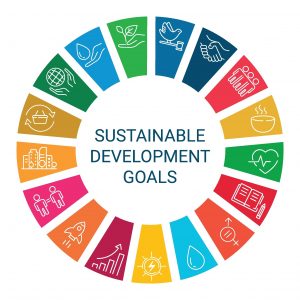
  • A robust geoinformation infrastructure is vital to achieving the UN’s Sustainable Development Goals by 2030.
  • Around the world, there is a growing need for people to gather, collect, process, edit, and analyze geoinformation.
  • GIS, GeoAI, and Geo-ICT are used in all sectors. Thousands of people are needed, and these people deserve a pathway into the field and a strong start through quality courses and training programs.

Geo-ICT’s Sustainability Pledge

At Geo-ICT, we pledge to use our expertise in geoinformation to actively support sustainable development. By offering practical training, we equip professionals with the skills to use GIS technology for monitoring, protecting, and improving our living environment. We are committed to the United Nations Sustainable Development Goals and see it as our responsibility to contribute to solutions for climate change, biodiversity, and a livable future through knowledge sharing and innovation.

Mission: Practice, learn, understand, and put it into action right away

  • Geo-ICT Training Center, Nederland - Over onsThe field of geodesy measures the size and dimensions of the Earth, its orbit and orientation in the universe, as well as the gravitational field and, consequently, sea level. The field is experiencing renewed interest, and we publish, communicate, and provide information on these topics. We offer various surveying courses on a monthly basis.
  • We keep up with innovative developments in Geo-ICT, such as 3D CAD, 3D GIS, the Internet of Things, continuous sensors, drones, data analysis, and 3D scanning, and we are constantly updating and improving our course catalog. Our catalog contains more than 200 to-the-point, practical, immediately applicable courses and blended learning programs.
  • We are involved in the UniGIS program at VU University Amsterdam.
  • We assist universities of applied sciences, vocational schools, and high schools in incorporating CAD, GIS, surveying, and hydrography into their curricula.
  • We continuously hire graduates from universities of applied sciences and research universities across all fields of study. We provide these trainees with further training and help them get a strong start in the job market.
  • Our clients hire our trainees, creating a win-win-win situation: the trainee, the client, and us as the training provider.

Frequently Asked Questions

  • CAD (Computer-Aided Design) and GIS (Geographic Information System) are both technologies used for working with spatial data, but they have different applications and functionalities.
  • CAD focuses primarily on the design and modeling of physical objects, such as buildings, roads, and machines. It is often used in architecture, civil engineering, and mechanical engineering to create technical drawings and designs. CAD software offers advanced 2D and 3D drawing capabilities and supports detailed geometric operations.
  • GIS, on the other hand, focuses on collecting, managing, analyzing, and visualizing geographic data. It emphasizes the spatial context of data and enables users to understand relationships and patterns between different layers of information, such as land use, demographics, natural resources, and infrastructure. GIS software offers advanced map visualization, data analysis, and geospatial modeling tools.
  • The main difference between CAD and GIS is that CAD focuses on designing and modeling individual objects, while GIS focuses on understanding and analyzing geographic data on a broader scale. CAD focuses more on the technical aspects of objects, while GIS emphasizes the spatial relationships and context of data. However, both technologies can be complementary and, in some cases, integrated to tackle complex projects that require both design and spatial analysis.

ArcGIS and QGIS are both popular geographic information systems (GIS), but there are some key differences between them.

ArcGIS is a commercial GIS platform developed by Esri. It offers a comprehensive range of tools and features for data analysis, data management, and map visualization, with an emphasis on ease of use and support for enterprise solutions. It is often used in professional settings and provides extensive technical support and training opportunities, but it requires a license and can be expensive.

QGIS, on the other hand, is open-source GIS software available for free. It also offers a wide range of functionalities, including data analysis, data management, and map visualization, but with a greater emphasis on flexibility and customizability. QGIS is often used by researchers, academics, and communities looking for a cost-effective GIS solution. It has an active user community and offers customization options through plugins and extensions.

In general, both ArcGIS and QGIS can be used to perform geospatial analysis and create maps, but the main differences lie in licensing costs, ease of use, and the degree of customization. The choice between the two depends on the user’s specific needs and budget.

The European Copernicus program is an ambitious initiative by the European Union for Earth observation and monitoring of our planet. The program is designed to provide reliable and up-to-date information on various aspects of the environment and security. It comprises a range of satellites, in-situ sensors, and data services that collect data on topics such as climate change, air quality, land use, the marine environment, and natural disasters. This data is made freely available to users around the world, including policymakers, researchers, businesses, and the public. The Copernicus program plays a crucial role in promoting sustainability, resilience, and informed decision-making in the fields of the environment and security.

Blended learning is an educational approach that combines traditional classroom instruction with online learning. This allows students to benefit from both face-to-face interactions with instructors and fellow students and the flexibility and personalized learning opportunities offered by digital tools.

There are various models of blended learning; we use the rotation model, in which students alternate between online learning and in-person classes according to a set schedule.

  • Start by emailing your resume and cover letter to anton.schutte@geo-ict.nl.
  • Next, we’ll schedule an online introductory interview, usually via Google Meet (Microsoft Teams is also an option).
  • After that, we’ll get right to work with you to make your resume appealing to the geospatial sector.
  • You can take a free course, such as QGIS Basics, so we can get to know each other better.
  • If we’re a good fit for each other, we’ll make you an offer.
  • After your appointment, we’ll continue building your resume together and will soon schedule interviews with one or more clients.
  • You’ll follow in the footsteps of the many trainees who came before you—successfully launching your career in the geospatial sector.

After the course, you’ll have another 2 weeks to ask the instructor questions. Since the instructor is already teaching other courses, it’s best to email your questions to info@geo-ict.nl. Your question will be forwarded to the instructor, and you’ll receive a response within 24 hours.

If you’re a bit further along and encounter practical problems you can’t solve on your own, it’s best to use Online Support. You’ll spend one day online with the instructor and receive personalized one-on-one instruction. All your problems will be resolved, and you’ll have made significant progress.

If you run into problems in practice that you can’t solve on your own, you have two options. You can sign up for a beginner or advanced course, or you can sign up for Online Support. You’ll spend a day online with an instructor and receive personalized one-on-one instruction. All your problems will be resolved, and you’ll have made significant progress.

If you’re pursuing a degree, it’s very important to know why you’re doing it and what you hope to achieve. For us, the priority is that you’re happy as a person and already have a job you really enjoy. That gives you a strong foundation. With us, in addition to your studies, you can take advantage of more than 200 practical courses taught in small groups. This means you’ll have plenty of interaction with instructors and other professionals working in the field. You’ll build a solid network.

In addition, our study coaches and instructors will guide and support you throughout your studies. These study coaches and instructors have usually already completed that master’s program, so they know what they’re talking about. We also continuously review your resume. It gets better and better as you earn more EC credits and complete practical courses.

Want to know more? Send an email to: suzy.palmer-smith@geo-ict.nl

  • That’s certainly possible. The big advantage is that you’re already working and earning a living. You won’t accumulate student debt. If you’re interested, please send your resume to anton.schutte@geo-ict.nl.
  • You’ll be studying Geo-ICT at a university of applied sciences alongside your job. Click here for more information.
  • Also check out Simon’s story. He completed the MBO surveying program at SOMA College in Harderwijk and is now pursuing the HBO Geo-ICT program.

Absolutely! Let your intuition guide you. Let your true wishes and desires come to the surface, and just go for it. Email your resume and cover letter to anton.schutte@geo-ict.nl, and we’ll schedule an online interview with you.

My name is Suzy Geerman, Course Coordinator. Would you like more information?

Click here