A geospatial data analyst is responsible for collecting, cleaning, transforming, and analyzing geospatial data. You will work with various types of geospatial datasets, such as satellite imagery, maps, demographic data, and georeferenced information.
What Does a Data Analyst Do?
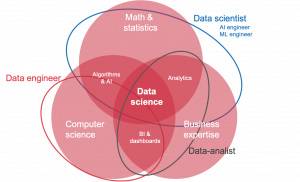
As a data analyst, you play a crucial role in interpreting geographic data to generate meaningful insights. Your daily tasks include collecting, processing, and analyzing data, which is essential for supporting strategic decisions. Here are some key activities you’ll be involved in:
Collecting data: You gather data from various sources to create a comprehensive dataset. This includes, for example, data from the EU Copernicus Program.
Data processing: Cleaning and structuring data for analysis.
Analysis: You use advanced analytical tools and techniques such as Python, R, and SQL to identify patterns and trends.
In addition to these technical skills, your ability to translate complex information into understandable language is invaluable. You’re not just working with numbers; you translate them into practical insights that help the company move forward. Your analyses have a direct impact on business strategy and development, especially in how geoinformation is used to understand environmental issues or predict market trends.
Let’s not forget that your work impacts many sectors, from public administration to the financial world, where your insights help drive better decisions. Your role as a data analyst is therefore not just important; it is indispensable in our data-driven world.
Why is the work of a Data Analyst important?
The work of a Data Analyst is fundamental to any organization that prioritizes data-driven decision-making. By transforming complex data into clear insights, you enable decision-makers to make informed choices. Here are a few reasons why your role as a data analyst is so crucial:
Strategic decisions: Your analyses help shape strategies that move the company forward.
Efficiency improvements: You identify opportunities for process improvements that save costs and increase efficiency.
Risk management: By recognizing trends and patterns, you help minimize risks.
In the world of geoinformation, your work plays a key role in addressing larger issues such as urban planning and environmental management. Your insights help in understanding complex geographic phenomena and influence decisions ranging from land use to disaster management.
The impact of your work thus extends far across various domains and makes you indispensable in today’s data-driven decision-making. Your skills ensure that large amounts of information become manageable and usable for everyone within your organization.
The Impact of Geoinformation on a Data Analyst
The role of geoinformation in the work of a Data Analyst is both profound and transformative. Geo-information provides geographic context that is essential for many sectors, from urban development to environmental sciences. Your expertise enables you to translate this complex information into practical insights. Some key ways in which geo-information influences your work include:
Location analysis: Determining optimal locations for business expansions or emergency services.
Trend analysis: Tracking demographic and economic trends across geographic areas.
You use advanced tools to manipulate datasets containing location data, allowing you to offer unique insights that would otherwise go unnoticed. This not only makes your work vital for strategic planning but also strengthens your role as a bridge between raw data and decision-making.
In practice, this means you contribute to projects ranging from optimizing delivery routes to predicting urban growth, which has direct economic and social benefits. Your analyses therefore not only help in making better decisions but also contribute to a more sustainable and efficient society.

Inform & Apply
Want to know more?
Do you have questions about the course content? Or are you unsure whether the course aligns with your learning goals or preferences? Would you prefer an in-house or private course? We’d be happy to help.
Our data analysts are not only trained in advanced data analysis techniques but also gain in-depth knowledge of GIS and Geo-Basic Registries, which is essential for working with geographic information. After completing your training, you can join our team, where you’ll have opportunities to be seconded to various clients.
Â
Our clients include municipalities, federal agencies, the Land Registry, engineering firms, water boards, provinces, and contractors. This broad range of clients reflects the versatility and demand for your expertise in the market.
Tasks
As a Geospatial Data Analyst, you are responsible for a wide range of tasks that are crucial to understanding and applying geographic information. Your responsibilities include:
Â
Applying GIS and Analysis Techniques: You use advanced geographic information systems (GIS) and analysis techniques to identify spatial patterns, trends, and relationships in data, which is essential for solving complex problems.
Data Cleaning and Preprocessing: Ensuring data quality through thorough data cleaning and preprocessing. This includes:
Cleaning data.
Detecting and correcting errors.
Translating Analyses into Comprehensible Visualizations: In consultation with stakeholders and decision-makers, you translate complex analyses into comprehensible visualizations, reports, and presentations, thereby supporting strategic decisions.
Creating Geographic Visualizations: You use your expertise to create geographic visualizations such as maps, charts, and heatmaps that help effectively communicate data insights.
Â
Each of these tasks contributes to a better understanding of geographic data and supports decision-making across various sectors. Through your work, complex information becomes accessible and usable for a broad audience.
Frequently Asked Questions About the Data Analyst Position
Een Data Analist bij Geo-ICT verzamelt, opschoont, transformeert en analyseert geografische (geo-)data zoals satellietbeelden, kaarten en demografische informatie. Je vertaalt deze data naar inzichten die organisaties helpen bij strategische beslissingen.
De functie Data Analist is essentieel omdat je complexe data toegankelijk maakt voor besluitvorming. Door trends en patronen te ontdekken, ondersteun je procesverbetering, risicobeheersing en strategische ontwikkeling – vooral wanneer het om geo-informatiedomeinen gaat.
Vaardigheid in het opschonen en structureren van data, en het uitvoeren van analyses om inzichten te formuleren.Goede communicatieve vaardigheden om bevindingen begrijpelijk te maken voor stakeholders.
Een typische werkdag kan er als volgt uitzien:
’s Ochtends: je verzamelt nieuwe datasets of laadt geo-data binnen (bijv. satelliet- of locatiegegevens).
Middag: je voert data-opschoonwerk uit, ontwikkelt of test analyses, en maakt visualisaties of kaarten van de resultaten.
Namiddag/laat: je bespreekt met collega’s of opdrachtgevers de bevindingen, vertaalt deze naar actiepunten en bereidt de volgende analyse voor.
Ja, Geo-ICT biedt trajecten waarin je opgeleid wordt voor deze functie en aan de slag kunt, bekijk ons Geo-ICT traineeship en solliciteer vandaag!
Als Data Analist kun je doorgroeien naar rollen zoals Senior Data Analist, Data Scientist of Specialist Geo-Data & Analyse. Door aanvullende kennis van bijvoorbeeld machine-learning, geo-informatietechnieken of visualisatietools vergroot je je loopbaanmogelijkheden.
Nee — maar hoewel je al veel bereikt met algemene data-analysevaardigheden, zorgt kennis van geo-informatie (zoals GIS, locatieanalyse, geo-databases) ervoor dat je rol als Data Analist in de Geo-ICT extra krachtig is. Je kunt dan geo-data direct toepassen in projecten en analyses.
In de functie Data Analist gelden kwaliteitsnormen zoals: correcte metadata-registratie, data-governance, reproduceerbare analyses, versie-beheer van datasets, betrouwbare visualisaties, en waar relevant goed omgaan met privacy of locatiegevoelige data.
Je kunt direct solliciteren op ons Geo-ICT Traineeship of via de pagina’s widget contact opnemen door je naam, e-mail en telefoonnummer in te vullen voor een vrijblijvend gesprek. Ook kun je ons een WhatsApp-bericht sturen. Voor vragen over de inhoud of of de functie aansluit kun je eveneens contact opnemen.
Search the website
Find courses, MOOC content, articles and more in one place.