GIS Operator Position

A GIS operator is responsible for managing, analyzing, and visualizing geographic data using GIS software. GIS combines geographic data (such as maps, satellite imagery, and demographic information) with attribute data (such as economic data and population statistics) to generate information and analyze spatial relationships.

What does a GIS Operator do?
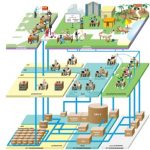
Geo-ICT Training Center, Nederland - Functie GIS OperatorAs a GIS Operator, you play a crucial role in managing and visualizing geographic data. Your daily tasks are not only technical in nature but also creative, as you translate complex information into understandable and visually appealing maps. Here are some key activities you’ll be involved in:

  • Analyzing spatial relationships between different data layers.
  • Using GIS software to produce detailed maps that aid in urban planning, environmental management, and more.
  • Data processing and editing: accurately entering and updating data in GIS databases.

In addition to these technical skills, you’ll be involved in advising policymakers and stakeholders. Your insights help inform well-founded decisions regarding spatial development and crisis management. This role is therefore not only important for visualizing data but also serves as a bridge between data and practical real-world applications. Your work directly influences how communities develop and how we manage our natural and built environments.

Why is the work of a GIS Operator important?

The work of a GIS Operator is invaluable to both governments and businesses. With your expertise in geographic information systems, you contribute to more efficient processes and better-informed decision-making. Here are a few reasons why your role is so crucial:

  • Decision-making: You make data visually accessible, making complex information easier for decision-makers to understand.
  • Risk management: By mapping natural hazards and land use, you help plan measures to minimize risks.
  • Development and planning: Your work supports urban planning and development, enabling cities to grow more sustainably and efficiently.

Every map layer you create or edit has the potential to make a significant impact. Whether it involves managing natural resources, planning new infrastructure, or responding to crisis situations, your skills ensure that critical information is available and up-to-date. This makes your role not only relevant but also indispensable in the pursuit of a well-organized and informed society.

The Impact of Geoinformation on a GIS Operator

Geo-information plays a fundamental role in the daily tasks of a GIS Operator. This data not only helps shape the physical world around us but also directly influences how you perform your work. Below are some key influences:

  • Real-time decision-making: With up-to-date geoinformation, you can respond quickly to changing conditions, such as weather changes or emergencies.
  • Improved accuracy: You use geo-information to increase the precision of maps and spatial analyses, which is essential for accurate planning and implementation.

Integrating geospatial data into your workflow not only makes you more efficient but also provides a deeper understanding of the geographic context. This is crucial for tasks such as planning urban expansion or environmental management. Your expertise ensures that this information is transformed into actionable insights that have a direct impact on decision-making across various sectors. As a result, your role as a GIS Operator is indispensable in the effective use of geoinformation.


Inform & Apply

Choose fileNo file chosen
Max. file size: 200 MB.

Job Opening: Junior GIS Specialist

Geo-ICT Training Center, Netherlands is a platform for career starters, people looking to change careers, and those returning to the workforce. We’ll train you for the role, and we have various clients where we’ll help you get started. You’ll remain employed by us for a year, after which you may be hired directly by the clients. If you’re interested, please apply for the junior GIS specialist position.

Want to know more?

Do you have questions about the course content? Or are you unsure whether the course aligns with your learning goals or preferences? Would you prefer an in-house or private course? We’d be happy to help.

Education

As a GIS Operator, you will have extensive knowledge and skills in both ArcGIS and QGIS. Your expertise extends to advanced proficiency in FME, enabling you to perform complex geodata transformations and analyses. Thanks to the training courses offered at the Geo-ICT Training Center Netherlands, you are well-prepared to work with a variety of clients. This training ensures that you are not only technically competent but also immediately deployable in the field, where you provide valuable insights and support with your geoinformation skills.

Tasks

As a GIS Operator, your responsibilities include a wide range of tasks that are essential for the effective management and use of geographic information. Here are the main activities you will perform on a daily basis:

  • Data collection:
    • You collect geographic data from various sources such as maps, aerial photos, GPS devices, and government databases.
    • This may involve fieldwork to collect data directly on-site, making your role both dynamic and field-oriented.


  • Data management:
    • You organize and manage geographic data in a GIS database.
    • This involves entering, updating, and verifying data to ensure it is accurate and up-to-date.


  • Data Analysis:
    • You perform spatial analyses to identify patterns, trends, and relationships within the data.
    • Analysis techniques include geoprocessing operations such as buffering, overlay analysis, spatial querying, and network analysis.


  • Map production:
    • You create maps and graphical visualizations based on the analyzed data.
    • This task requires cartographic skills to present data effectively and clearly.


  • User support:
    • You provide support to users of the GIS system by answering questions, resolving technical issues, and providing training on the use of GIS software and tools.


These tasks ensure that, as a GIS Operator, you play a central role in translating complex geodata into practical and accessible information that can be widely applied.

Frequently Asked Questions About the GIS Operator Position

Een GIS Operator is verantwoordelijk voor het beheren, analyseren en visualiseren van geografische gegevens met behulp van GIS-software. Je vertaalt complexe data-lagen (zoals kaarten, satellietbeelden, demografie) naar begrijpelijke kaarten en analyses.

De functie is belangrijk omdat jouw werk direct bijdraagt aan inzicht in ruimtelijke relaties, betere besluitvorming en efficiënte planning. Of het nu gaat om infrastructuur, milieu, stedelijke ontwikkeling of crisismanagement — jouw kaarten en data helpen de juiste keuzes te maken.

Bij Geo-ICT is er aandacht voor geo-informatie in combinatie met GIS-vaardigheden: je beheert geo-data, werkt met kaarten en GIS-tooling en levert ondersteuning voor diverse sectoren. Hiermee is de rol meer dan alleen basiskaartwerk; je werkt met actuele data en visualisaties.

Belangrijke vaardigheden zijn onder andere:

  • Beheersing van GIS-software zoals bijvoorbeeld ArcGIS, QGIS en het verwerken van data in GIS-databases.
  • Vermogen om ruimtelijke analyses uit te voeren (buffers, overlay, netwerken) en visualisaties te maken.
  • Nauwkeurig werken met data-invoer, kwaliteitscontrole en beheer van geografische databases.
  • Goede communicatieve vaardigheden: je ondersteunt gebruikers en maakt geografische inzichten begrijpelijk.

Een typische werkdag kan er als volgt ongeveer uitzien:

  1. Het inlezen en controleren van nieuwe geografische data of wijzigingen in kaarten.
  2. Het uitvoeren van ruimtelijke analyses om trends of relaties in data te ontdekken.
  3. Het maken of bijwerken van kaartmateriaal en visualisaties voor interne of externe belanghebbenden.
  4. Het ondersteunen van gebruikers of teams met GIS-vragen of kaartmateriaal.
  5. Eventueel overleg met collega’s of stakeholders over de toepassing van de kaart- of dataresultaten.

Ja, Geo-ICT biedt trajecten waarin je opgeleid wordt voor deze functie en direct aan de slag kunt, bekijk bijvoorbeeld de vacature GIS Specialist. Weet je nog niet zeker of je dit wilt maar wil je wel werken in de Geo-ICT? Dan is de Geo-ICT Traineeship vacature wellicht wat voor jou!

Doorgroeien kan bijvoorbeeld naar rollen zoals GIS-Specialist, GIS-Analist of Geodetic Engineer. Als je extra vaardigheden ontwikkelt (zoals scripting, automatisering, geo-datamodellering) vergroot je je carrièrekansen en kun je betrokken raken bij complexere projecten.

Ja — hoewel basisvaardigheden in GIS belangrijk zijn, maakt kennis van geo-informatie (zoals geo-databases, locatieanalyse en data-integratie) je rol bij Geo-ICT krachtiger. Het helpt je om geografische inzichten beter te vertalen en toe te passen in praktische projecten.

In deze rol gelden kwaliteitsnormen op het vlak van datakwaliteit en kaart-/data-beheer: correct werken met metadata, accurate registratie, versiebeheer en beveiliging van (geo-)data. Ook is betrouwbaarheid en validatie van geografische analyses van groot belang.

Je kunt direct solliciteren op de vacature junior GIS specialist of ons Geo-ICT Traineeship of via de pagina’s widget contact opnemen door je naam, e-mail en telefoonnummer in te vullen voor een vrijblijvend gesprek. Ook kun je ons een WhatsApp-bericht sturen. Voor vragen over de inhoud of of de functie aansluit kun je eveneens contact opnemen.