
An environmental field worker is responsible for collecting and processing the geodata required for remediation projects and permits.
An environmental field worker is responsible for collecting and processing the geodata required for remediation projects and permits.
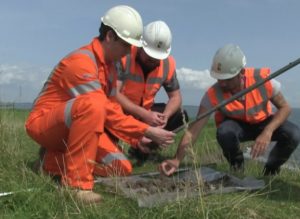
As an environmental field worker, you work outdoors every day, playing an important role in protecting our natural environment. Your tasks are not only diverse but also crucial for the environment. Below is an overview of what you do:
Your work directly contributes to how we, as a society, manage our natural resources and minimize environmental risks. Through your efforts, we are actively working toward a better and more sustainable environment. Every sample you collect and every measurement you take helps make a significant difference. Your work is therefore not only important but also indispensable for a healthy living environment.
The work of an environmental field worker is indispensable for preserving our living environment. Every day, you dedicate yourself to keeping the Earth livable, not only for ourselves but also for future generations. Here are a few reasons why your role is so crucial:
Thanks to your expertise and hard work, there is a better understanding of how human activities impact the environment. This enables us to make more informed choices that contribute to sustainability. Your role as a bridge between science and society helps raise awareness and drive action. Every report you write and every recommendation you make helps keep our planet healthy. Your dedication is therefore not only valuable—it is essential.
Geo-information plays a crucial role in the work of an environmental field worker. Using geographic data not only helps you work more efficiently but also improves the accuracy of your findings. Here are some ways in which geo-information influences your work:
These technologies ensure that you not only know where to go, but also when the best time is for research, based on historical and real-time data. These insights allow you to predict where potential problems may arise and take proactive action. Geo-information thus strengthens your role as an environmental fieldworker and makes your work not only more efficient but also more effective in protecting our natural environment. Your contributions are essential for a sustainable future.
Geo-ICT Training Center, Netherlands is a platform for entry-level professionals, those seeking career transitions, and those returning to the workforce. We provide job-specific training and have a variety of clients where we can help you get started. You will remain employed by us for one year, after which you may be hired directly by one of our clients. If you’re interested, please apply for the field worker position.

Do you have questions about the course content? Or are you unsure whether the course aligns with your learning goals or preferences? Would you prefer an in-house or private course? We’d be happy to help.
As an environmental field worker, you have completed a thorough training program, which means you are well-prepared for your challenging tasks in the field. Here are the key training programs and courses you have completed:
In addition to these specific training courses, you continue to expand your knowledge by taking various MOOCs (Massive Open Online Courses) in the field of the environment. These online courses enable you to stay up to date on the latest developments and techniques relevant to your work and further professional development.
As an environmental field worker, you have a variety of essential responsibilities that directly impact environmental protection and management. Below is a detailed overview of your daily tasks:
These tasks require not only technical skills and attention to detail, but also a strong commitment to environmental protection. Your work as an environmental field worker plays a key role in shaping our understanding of and response to environmental issues.
An Environmental Field Technician is responsible for conducting fieldwork as part of environmental investigations: this includes collecting soil and groundwater samples, analyzing environmental data, performing on-site measurements, and reporting the findings.
This role is crucial because accurate data on soil and water quality are essential for environmental protection, sustainability, risk assessment, and decision-making in land-use projects. Through your fieldwork, you provide reliable data that enables organizations to comply with laws and regulations and meet societal goals.
Key skills include:
A typical day might look like this:
Yes, Geo-ICT offers training programs that prepare you for this role so you can start working right away. Check out the field worker job posting. Not sure if this is the right fit for you, but interested in working in the Geo-ICT sector? Then our Geo-ICT Traineeship might be just what you’re looking for!
You can advance to roles such as Senior Field Surveyor, Project Manager for Soil and Environmental Research, or Environmental Consultant. Additional certifications or expertise in geoinformation technology will enhance your career prospects.
Although you can already accomplish a great deal with field skills and a basic understanding of environmental science, knowledge of geoinformation (such as maps, location data, and historical data) provides added value in this role at Geo-ICT.
You can apply directly for the field worker position. If you’re not yet sure whether this role is right for you but are interested in working in Geo-ICT, apply for the Geo-ICT Traineeship. You can also contact us via the “Contact” page by entering your name, email address, and phone number to schedule a no-obligation conversation. You can also send us a WhatsApp message. If you have questions about the job description or whether the position is a good fit for you, please feel free to contact us.
