A surveyor is responsible for measuring, determining, and describing land, buildings, and other objects on the earth's surface. This means that a surveyor is responsible for performing various technical tasks, such as creating maps, drawings, and models of land and buildings, and determining the dimensions, boundaries, and location of objects.
What a Surveyor Does
As a surveyor, you play a versatile and crucial role across various sectors. Your responsibilities are broad and technical in nature, making your work challenging every day. Here’s a glimpse into your daily tasks:
Surveying sites: Whether it involves undeveloped land or complex urban environments, you ensure that the exact dimensions and boundaries are known.
Surveying buildings and topography. The data providers—such as municipalities and water boards—for the BAG and BGT ensure that topographic maps are up to date and that changes are delivered on time to the National Facility. As a surveyor, you play a key role in this.
Determining property boundaries: In cadastral work, you play a key role in establishing who owns what. This is particularly crucial when buying or selling land.
In addition to these technical skills, you use advanced software such as MOVE3 for surveying calculations and AutoCAD Civil 3D Survey for processing the collected data. You are not only engaged in physical fieldwork but also in data analysis and processing at the office.
Your expertise helps ensure the accurate planning and execution of projects in public spaces, which is essential for both the construction sector and urban and municipal development. Your efforts ensure that projects proceed efficiently, accurately, and in compliance with regulations.
Why is the work of a surveyor important?
The importance of a land surveyor in modern society can hardly be overstated. This profession plays a crucial role in various vital aspects of both urban and rural development. Here are some key reasons why your work as a land surveyor is so essential:
Providing legal certainty: Through accurate measurements, you ensure clear property boundaries, which is essential for legal clarity and preventing disputes between landowners.
Providing geometric data for projects: Every construction project begins with your work; you ensure that buildings are placed in the correct location, which contributes to safety and the optimization of space utilization.
Your contribution goes beyond just the technical work:
Environmental considerations: When laying out new developments, you take into account environmental conservation and sustainable land use.
Infrastructure development: Your measurements form the basis for the development of roads, bridges, and public facilities.
This versatility means that as a surveyor, you are not only a technical expert but also an indispensable link in the planning and execution of projects that influence the quality of life for many. Thanks to your expertise, large-scale projects can be carried out efficiently and with respect for both regulations and the environment, making your role fundamental to the future of our living environment.
Request information
Surveyor Job Openings
Geo-ICT Training Center, Netherlands is a platform for entry-level professionals, those seeking career transitions, and those returning to the workforce. We provide job-specific training and have a variety of clients where we can help you get started. You will remain employed by us for one year, after which you may be hired directly by one of our clients. If you are interested, please apply for the land surveyor position.
Do you have questions about the course content? Or are you unsure whether the course aligns with your learning goals or preferences? Would you prefer an in-house or private course? We’d be happy to help.
A junior surveyor starts out with basic skills in geometric data processing. Through on-the-job training and structured courses, he or she progresses to the role of an independent surveyor. A surveying professional develops expertise in the use of various specialized applications, including MOVE3, AutoCAD Civil 3D Survey, and ReCAP.
The training pathway for a surveyor includes essential courses such as the Surveying Course, MOVE3D Course, and Geodata Monitoring Course. These courses are designed to strengthen both theoretical knowledge and practical skills.
From the Geo-ICT Training Center in the Netherlands, employees are prepared to start working at leading surveying firms. Examples of such companies where our graduates find employment include Geomaat, Facto-Geo, Leop, IGL Landmeten,Ingenieursbureau RPS, Kempkes Landmeten, the Land Registry, municipalities, and water boards.
Tasks
As an all-around surveyor, you play a key role in various aspects of surveying and geoinformation. Here is a list of your main responsibilities:
Conducting land surveys:
You map the physical characteristics of land, such as distances, elevations, angles, and boundaries.
You use advanced surveying equipment such as GPS, total stations, 3D scanners, and drones to ensure accurate measurements.
Data analysis and processing:
After collecting measurement data, you analyze and process it using software and computer programs such as AutoCAD and Pix4D
You present the data in formats such as maps, floor plans, and reports.
Boundary Demarcation and Cadastral Work:
You determine the exact boundaries of parcels and properties, often in collaboration with the land registry and legal entities.
This includes researching property rights and drafting legal documents.
Recording and updating the geometry of buildings and residential properties.
Verifying that new or modified structures are correctly registered.
Potential changes are identified based on building permits and aerial photographs.
Updating BAG and BGT maps
Providing advice and expertise:
As an expert, you advise clients, project teams, and other stakeholders on suitable building sites and land use.
You resolve surveying issues and advise on relevant regulations and requirements.
This list of tasks demonstrates how crucial your role as a surveyor is in the planning and execution of both small and large projects, with a direct impact on the development and management of rural and urban environments.
Frequently Asked Questions About the Surveyor Position
A surveyor is responsible for measuring, determining, and describing land, buildings, and other objects on the earth's surface. This includes conducting field surveys, determining property boundaries, and sometimes processing survey data using CAD/GIS software.
This role is important because accurate measurements and documentation of land and structures form the foundation for construction and infrastructure projects, property registrations, infrastructure development, and land-use planning. Your work ensures precision, legal certainty, and efficiency in the later stages of projects.
At Geo-ICT, the focus is on combining fieldwork with geoinformation—you’ll work outdoors in the field using modern surveying equipment (such as GPS and total stations) and process the data in CAD/GIS environments. This training will equip you with the versatility to work across a wide range of surveying and geodata applications.
Key skills include:
Experience with or an affinity for field surveying, GPS equipment, and total stations.
(optional) Ability to process survey data in CAD/GIS software, such as AutoCAD, QGIS, or specialized surveying software.
Attention to detail, a positive attitude toward outdoor work, and willingness to travel to project sites.
Understanding of spatial context, property or land management, and surveying regulations.
A typical workday might look like this:
In the morning, you head to a project site to conduct field surveys: you set up equipment, measure points, lines, and surfaces, and determine the location.
(After)noon: You process the collected measurement data using CAD/GIS software and consult with your team or client, report the results, and prepare for the next survey.
Yes, Geo-ICT offers training programs that prepare you for this role so you can start working right away. Check out the Junior Surveyor job posting. Not sure if this is the right fit for you, but interested in working in the Geo-ICT sector? Then our Geo-ICT Traineeship might be just what you’re looking for!
You can advance to roles such as Senior Surveyor, Surveying Project Manager, or Geo-Data & Infrastructure Specialist. By gaining additional experience with advanced surveying methods, drones, 3D scans, or geographic information systems, you can expand your career opportunities.
Although the core of the job involves field surveys, knowledge of geoinformation (such as GIS, geodatabases, and location analysis) gives you a clear competitive edge in this role. This allows you not only to conduct surveys, but also to process, analyze, and apply data more effectively in projects.
This position is subject to quality standards regarding measurement accuracy, proper recording of location data, version control, and documentation. Safety on-site is also a priority—working outdoors, setting up equipment, and collaborating with other teams requires vigilance and clear work protocols.
You can apply directly for the Surveyor position or our Geo-ICT Traineeship, or use the contact widget on our website to get in touch by entering your name, email address, and phone number to schedule a no-obligation conversation. You can also send us a WhatsApp message. If you have any questions about the job description or whether the position is a good fit for you, please feel free to contact us.
Search the website
Find courses, MOOC content, articles and more in one place.

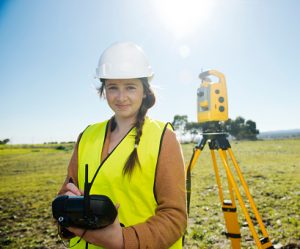 As a surveyor, you play a versatile and crucial role across various sectors. Your responsibilities are broad and technical in nature, making your work challenging every day. Here’s a glimpse into your daily tasks: