How can you uncover the hidden world beneath the water’s surface using smart measurements and maps? In this one-on-one course, you’ll discover how to collect and visualize accurate hydrographic data using echo sounders, multibeam systems, and geospatial tools. You’ll receive personalized guidance and learn, through interactive online modules and hands-on assignments, how to transform raw measurement data into clear insights for real-world applications.
Hydrography
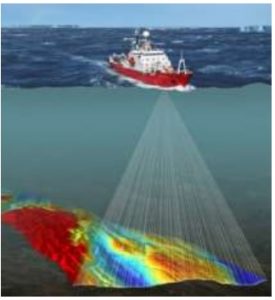
Hydrography is the field concerned with measuring and mapping water surfaces, such as rivers, lakes, seas, and oceans. Hydrographers collect data on water depths, the shape of the seabed, and the location of coastlines and waterways. This information is essential for safe navigation, environmental protection, and the planning of maritime infrastructure.
To collect this data, hydrographers use modern technology such as sonar equipment, GPS systems, and unmanned vessels. The measurements are often combined with geodata and geospatial information to create accurate maps and 3D models of the underwater world.
The applications are diverse. For example, hydrographic surveys play a key role in the construction of offshore wind farms, port management, and the monitoring of coastal changes. Due to climate change and rising sea levels, reliable and up-to-date hydrographic data is becoming increasingly important.
In short, hydrography is indispensable for anyone working with water, technology, and geospatial insights.
What will you learn in this Blended Learning course?
In this basic course in hydrography, you’ll discover how accurate measurements provide insight into our waterways and maritime environment. You’ll learn step by step how to use modern equipment, such as echo sounders, multibeam systems, and GPS, and how these technologies are applied in situations like coastal management, waterway management, and environmental monitoring.
The program combines theory with practice. You will not only gain a solid foundation in the technical operation of hydrographic measuring instruments, but also learn how to collect, analyze, and convert measurement data into actionable insights. You will apply this knowledge in realistic scenarios such as port development, river management, and monitoring coastal changes.
In addition, you’ll gain experience processing geodata and geospatial information, which will teach you how to accurately map underwater areas. The lessons are structured around relatable real-world examples and interactive assignments, so you can immediately see how hydrography works in the real world. Through the combination of technical content and practical application, you’ll develop a keen understanding of the field and learn how, as a future hydrographer, you can contribute to sustainable and efficient solutions in the water sector.
Why choose this Basic Hydrography course?
Blended learning combines independent online learning with practical, interactive sessions. This allows you to gain both theoretical knowledge and practical experience with hydrographic surveys, data processing, and geospatial analysis. The online modules give you the freedom to learn at your own pace. They include interactive lessons on topics such as sonar principles, water depth measurement, map interpretation, and processing survey data.
You’ll discover how to work with equipment such as echo sounders and multibeam systems, and learn how to analyze measurement data and link it to geodata. This will help you understand how this information is applied in areas such as coastal management and waterway monitoring.
During the hands-on online sessions, you’ll apply your knowledge directly. You’ll work with realistic hydrographic datasets and receive guidance from experienced subject matter experts. You’ll learn how to perform accurate field measurements, how to process that data correctly, and how to use it to clearly map waterways or seabeds, for example. This will give you a solid understanding of how hydrography is used in a wide range of projects—from port development to environmental monitoring.
Thanks to the combination of flexible learning and hands-on assignments, you’ll not only learn how to use modern measuring equipment but, more importantly, how to apply that knowledge in real-world situations. After this course, you’ll be able to independently collect, analyze, and use hydrographic data. In a world where reliable geodata is becoming increasingly important, that’s an indispensable skill.
Has this introduction sparked your interest, and do you want to further your career as a hydrographer? Then our traineeship might be just the thing for you. We’ll guide you through your learning journey and ensure you can get started in the field. This way, you’ll build a future in the world of hydrography, step by step.
You’ll receive 1-on-1 guidance. After signing up, our course coordinator will contact you to schedule your first session.
Learning objectives
After completing this course, you will be able to:
Conduct hydrographic surveys using echo sounders and multibeam systems to map water depths and seabeds.
Process and analyze measurement data using geospatial software to create reliable maps and models.
Combine field measurements with geodata for applications such as waterway management, coastal monitoring, and port development.
Use hydrographic datasets to interpret real-world situations and support decision-making in water management.
Want to know more?
Do you have questions about the course content? Or are you unsure whether the course aligns with your learning goals or preferences? Would you prefer an in-house or private course? We’d be happy to help.